Separation Unit
View system integration details
This page explains how Separation Chamber is classified within Machinery and Equipment Manufacturing. Technical values and manufacturer relationships are research references; confirm the current specification and supplier evidence for each order.
A specialized enclosure within a separation unit where physical or chemical separation processes occur.
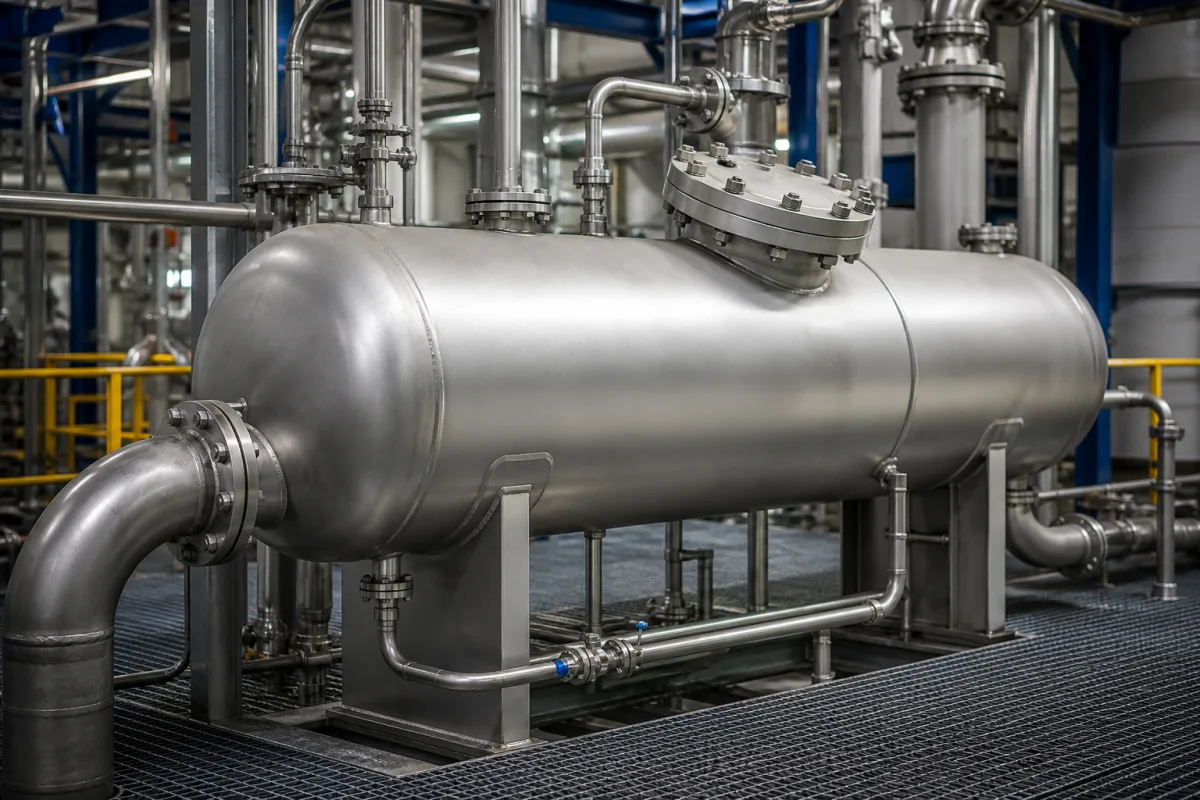
Technical details and manufacturing context for Separation Chamber
| Parameter | Typical range | Notes & selection driver |
|---|---|---|
| Operating Temperature | -40–85 °C | Outside range, seal materials degrade |
| Chamber Volume | 50–500 L | Select based on throughput |
| Separation Efficiency | 95–99.5 % | Depends on particle size and density |
| Pressure Drop | 0.05–0.15 MPa | Higher drop reduces flow rate |
| Leakage Rate | ≤0.01 mbar·L/s | Exceeds limit indicates seal failureISO 15848-1 |
| Material Grade | 316L | Corrosion resistance for chemical serviceASTM A240 |
| Wall Thickness | 8–20 mm | Thicker for higher pressure ratingsASME B16.5 |
| Inlet/Outlet Diameter | 50–200 mm | Match piping sizeDIN 2633 |
| Weight | 150–800 kg | Affects installation and support |
| IP Rating | IP54–IP65 | Higher rating for dusty or wet environmentsIEC 60529 |
| Surface Roughness | 0.4–0.8 μm Ra | Smoother for hygienic applicationsISO 4287 |
Ranges are indicative industry figures for RFQ preparation, not a supplier commitment. Confirm every value and standard with the legal manufacturer before ordering.
| pressure: | Up to 10 bar (150 psi) |
| flow rate: | 0.5-50 m³/h |
| temperature: | -40°C to +85°C |
| slurry concentration: | Up to 40% solids by weight |
Indicative industry ranges for design and RFQ preparation. Confirm the exact figures and applicable standard with the manufacturer before specifying.
Quoted from the published standard.
A practical evidence checklist for RFQ preparation and supplier evaluation.
Compare the published product scope and source details, then include your specifications and quantity in an enquiry.
Manufacturer profiles associated with Separation Chamber.
Explore company information and manufacturing capabilities, then discuss the scope of your project with a relevant supplier.
Ask for use case, specification boundaries, supplier type, and RFQ preparation information for this product.
The reference range is 1.0 to 1.6 MPa. However, the actual operating pressure must be confirmed with the manufacturer for the specific model and application, as it depends on the design and materials.
Common materials include stainless steel, carbon steel, and specialty alloys. The material grade, such as 316L per ASTM A240, is selected based on corrosion resistance and chemical compatibility with the process fluids.
Separation efficiency is the percentage of target material successfully separated, typically 95 to 99.5 percent. It depends on particle size, density, and the separation mechanism. Actual efficiency must be verified for the specific application.
Relevant standards include, ISO 15848-1 for leakage, ASTM A240 for material grade, ASME B16.5 for wall thickness, DIN 2633 for flange dimensions, IEC 60529 for IP rating, and ISO 4287 for surface roughness. Always verify compliance with the manufacturer.
This component is essential for the following industrial systems and equipment:
Editorial classification, named public sources where available, and source-reviewed manufacturer records.
Compare manufacturer profiles with relevant product and process capability.