Editorial Technical Reference

Control Unit (Processor)

This page explains how Control Unit (Processor) is classified within Machinery and Equipment Manufacturing. Technical values and manufacturer relationships are research references; confirm the current specification and supplier evidence for each order.

Technical Definition & Core Assembly

The computational core of a flow controller that processes input signals and executes control algorithms to regulate fluid flow.
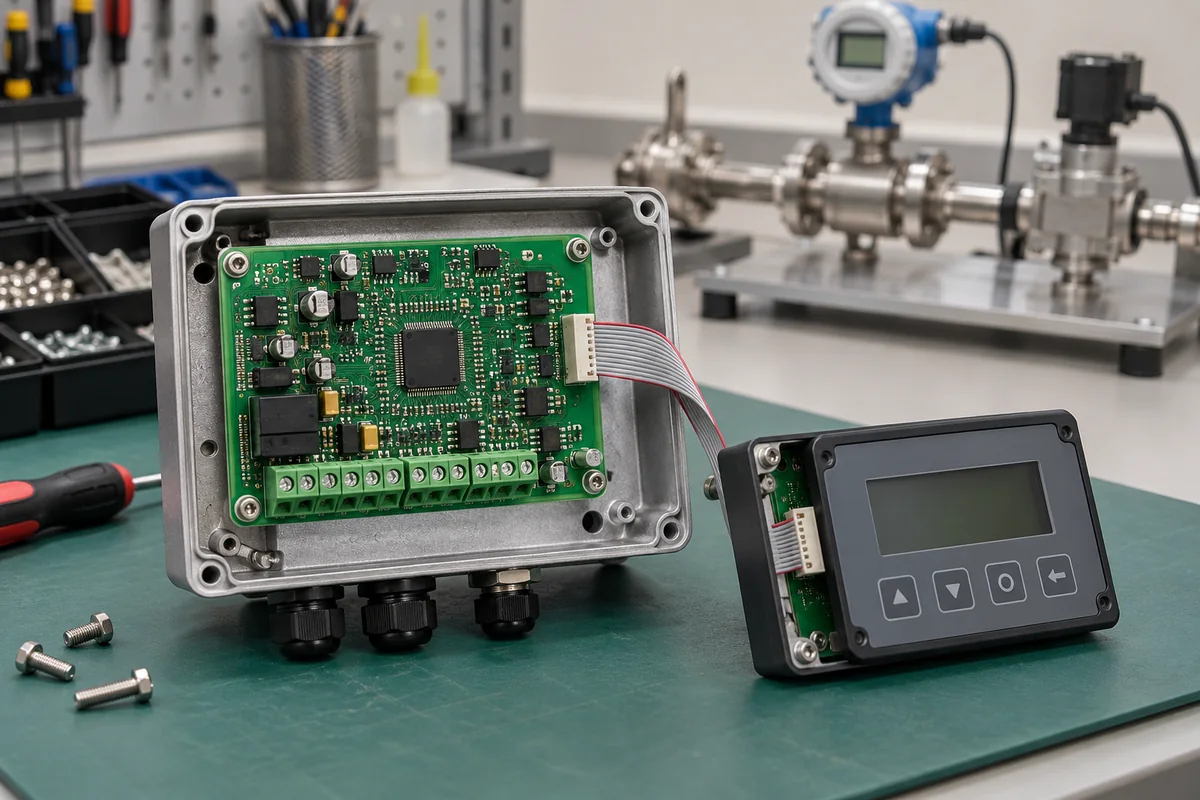
Representative product image. Confirm appearance and specifications with the manufacturer.

Product Specifications

Technical details and manufacturing context for Control Unit (Processor)

Definition
The control unit (processor) is the central processing component within a flow controller. It receives sensor data, executes programmed control logic, calculates required adjustments, and outputs commands to actuators to maintain precise flow rates, pressure, or other process variables according to set parameters. This unit continuously monitors input signals from flow sensors and other process variables, compares them against setpoints using embedded control algorithms (such as PID or fuzzy logic), and generates output signals to adjust control valves, pumps, or other actuators to achieve desired flow conditions. The control unit is typically housed in a plastic enclosure and contains a printed circuit board (PCB) with semiconductor silicon components and copper connectors. It operates on a rated supply voltage of 24 V DC ±10% (per IEC 61131-2) and consumes between 5 and 15 watts, depending on the number of I/O points. The processor clock speed ranges from 100 to 400 MHz, with program memory from 1 to 8 MB and data memory from 512 to 2048 KB. Analog input resolution is 12 to 16 bits with an accuracy of ±0.1% of full scale at 25°C (drift with temperature). Digital I/O count is configurable from 8 to 32. Communication protocols include Modbus RTU and Profibus DP (per IEC 61158). Operating and storage temperature ranges are -40 to 85°C (per IEC 60068-2-1 and IEC 60068-2-2), relative humidity 5 to 95% non-condensing (per IEC 60068-2-78), and ingress protection from IP54 to IP65 (per IEC 60529). Weight ranges from 0.5 to 2.0 kg depending on housing and I/O count. These specifications are reference ranges; verify model-specific values and standards with the legal manufacturer or supplier.
Working Principle
The control unit operates by continuously sampling input signals from flow sensors and other process transmitters. It compares these measured values against user-defined setpoints using embedded control algorithms, such as PID or fuzzy logic. Based on the error between setpoint and measured value, the processor calculates output commands and sends them to actuators like control valves or pumps. The unit also handles digital I/O for limit switches, alarms, and start/stop commands. It communicates with higher-level systems via Modbus RTU or Profibus DP for monitoring and configuration. The processor's clock speed and memory determine the control loop speed and complexity of algorithms that can be executed. The unit is designed to operate within specified environmental limits; exceeding these may cause malfunction. Regular verification of input accuracy and communication integrity is recommended.
Common Materials
Semiconductor silicon, Printed circuit board (PCB), Plastic housing, Copper connectors
Technical Parameters
ParameterTypical rangeNotes & selection driver
Rated Supply Voltage24 ±10% V DCOutside this range, processor may malfunction.IEC 61131-2
Power Consumption5–15 WHigher for models with more I/O.
Processor Clock Speed100–400 MHzDetermines control loop speed.
Program Memory1–8 MBSufficient for complex algorithms.
Data Memory512–2048 KBFor process data logging.
Analog Input Resolution12–16 bitHigher resolution improves measurement accuracy.
Analog Input Accuracy±0.1 % FSAt 25°C; drift with temperature.
Digital I/O Count8–32Configurable inputs/outputs.
Communication ProtocolModbus RTU, Profibus DPFor integration with PLC/SCADA.IEC 61158
Operating Temperature-40–85 °CExtended range for outdoor use.IEC 60068-2-1, IEC 60068-2-2
Storage Temperature-40–85 °CSame as operating for simplicity.IEC 60068-2-1, IEC 60068-2-2
Relative Humidity5–95 % RHNon-condensing.IEC 60068-2-78
Ingress ProtectionIP54–IP65IP65 for washdown environments.IEC 60529
Weight0.5–2.0 kgDepends on housing and I/O count.

Ranges are indicative industry figures for RFQ preparation, not a supplier commitment. Confirm every value and standard with the legal manufacturer before ordering.

Components / BOM
  • Central Processing Unit (CPU)
    Executes control algorithms and performs calculations
    Material: Semiconductor silicon
  • Memory Module
    Stores program instructions and temporary data
    Material: Semiconductor silicon with metal interconnects
  • Input/Output Interface
    Connects to sensors and actuators for data exchange
    Material: Copper connectors, PCB
  • Power Supply Circuit
    Converts external power to required voltages for internal components
    Material: PCB, electronic components (capacitors, resistors)
  • Communication Module
    Enables data exchange with external systems via protocols (Modbus, Profibus, Ethernet)
    Material: PCB, communication chips

Applied To / Applications

This component is essential for the following industrial systems and equipment:

Industrial Ecosystem & Supply Chain Structure

Complementary Systems
Downstream Applications
Specialized Tooling

Application Fit & Sizing Matrix

Operational Limits
pressure: 0 to 100 bar
flow rate: 0-1000 L/min
temperature: -20°C to +70°C
slurry concentration: 0-30% solids by weight
Media Compatibility
✓ Water-based fluids ✓ Hydraulic oils ✓ Chemical solutions with pH 5-9
Unsuitable: Highly corrosive acids (e.g., concentrated sulfuric acid)
Sizing Data Required
  • Maximum flow rate requirement
  • Process fluid viscosity
  • Required control algorithm complexity

Reliability & Engineering Risk Analysis

Failure Mode & Root Cause
Thermal degradation
Cause: Inadequate cooling leading to overheating, causing solder joint fatigue, material expansion/contraction stress, and accelerated electromigration in semiconductor components.
Electrical overstress
Cause: Voltage spikes, electrostatic discharge, or power supply instability damaging sensitive microelectronics, leading to gate oxide breakdown, latch-up, or junction failure.
Maintenance Indicators
  • Intermittent system resets or unexplained shutdowns indicating thermal or power instability
  • Unusual audible coil whine or capacitor buzzing from power regulation components
Engineering Tips
  • Implement active thermal management with proper airflow design, thermal interface materials, and temperature monitoring to maintain optimal operating range
  • Install surge protection devices and ensure clean, stable power supply with proper grounding to prevent electrical transients

Indicative industry ranges for design and RFQ preparation. Confirm the exact figures and applicable standard with the manufacturer before specifying.

Compliance & Manufacturing Standards

Applicable Standards
IEC 61508 - Functional Safety of Electrical/Electronic/Programmable Electronic Safety-related Systems CE Marking - EU Conformity for Safety, Health, and Environmental Protection

Quoted from the published standard.

Manufacturing Precision
  • Thermal Interface Flatness: 0.05mm across surface
  • Pin Alignment: +/-0.1mm positional tolerance
Quality Inspection
  • Thermal Cycling Test (-40°C to +125°C, 1000 cycles)
  • Electrical Parametric Testing (voltage, frequency, power consumption)

Manufacturers of Control Unit (Processor)

Manufacturer profiles associated with Control Unit (Processor).

Sourcing Control Unit (Processor) from China?
Tell us your specification and target quantity — we will match it against manufacturer records and come back with the factories that fit.
Request manufacturers We manufacture this

Manufacturer listings support early research and capability understanding. They are not certification, ranking, or transaction guarantees.

Technical documentation
Request current drawings, revision history, and a signed specification sheet.
Manufacturing capability
Verify equipment lists, process limits, capacity, and representative production evidence.
Inspection readiness
Confirm test methods, calibrated equipment, sampling plans, and traceable reports.
Supplier transparency
Check the legal entity, factory address, ownership, certifications, and direct contacts.

CNFX does not score or rank suppliers. Buyers must verify all claims and documents with the legal manufacturer before ordering.

Supply Chain Compatible Machinery & Devices

Heavy-Duty CNC Plasma Cutting Machine

The Heavy-Duty CNC Plasma Cutting Machine is a standalone industrial device designed for cutting conductive metals such as steel, stainless steel, aluminum, and copper alloys.

Explore Specs →
Automated Powder Coating System

Integrated industrial system for applying dry powder coatings to metal substrates.

Explore Specs →
Centrifugal Pump Impeller

The centrifugal pump impeller is a critical rotating component that converts mechanical energy from the motor into kinetic energy in fluid systems.

Explore Specs →
High-Precision CNC Laser Cutting Machine

Computer-controlled industrial machine using focused laser beams to cut sheet metal with micron-level accuracy.

Explore Specs →

Frequently Asked Questions

What is the function of the control unit in a flow controller?

The control unit processes sensor signals, executes control algorithms, and outputs commands to actuators to regulate fluid flow according to setpoints.

What communication protocols are supported?

The control unit supports Modbus RTU and Profibus DP, per IEC 61158, for integration with PLC or SCADA systems.

What are the environmental limits for operation?

Operating temperature is -40 to 85°C, relative humidity 5-95% non-condensing, and ingress protection IP54 to IP65. Exceeding these may cause malfunction.

How should I verify the specifications for my application?

The listed values are reference ranges. Always confirm model-specific values and standards with the legal manufacturer or supplier before selection.

Data Basis

Editorial classification, named public sources where available, and source-reviewed manufacturer records.

Preliminary Technical Classification
This page supports structured research, RFQ preparation, and supplier evaluation. It does not replace buyer-led supplier qualification, standards review, or technical approval.
Buyer enquiry

Request manufacturing insight for Control Unit (Processor)

Ask for use case, specification boundaries, supplier type, and RFQ preparation information for this product.

Where it goes
Straight to the CNFX editorial desk, and to the manufacturer if this product is linked to a claimed profile. Nothing is broadcast to a supplier list.
Your details stay here
We do not sell or rent enquiry data, and we do not add you to a mailing list. Used only to answer this request.
No commission, no middleman
CNFX is a directory. We take no cut of any order and never negotiate on a supplier's behalf.
What we don't claim
A listing is not an endorsement. Qualify every supplier and verify every figure yourself before ordering.

Your business information is used only to process this request.

Thank you! Your message has been sent. We'll respond within 1–3 business days.
Sorry, we couldn't send your message. Please try again, or email us at contact@cnfx.com.

Need to Manufacture Control Unit (Processor)?

Compare manufacturer profiles with relevant product and process capability.

Previous Product
Z-axis Ram/Spindle
Last Product
Get QuotesChat