This page explains how Automated Mold Preheating and Coating System is classified within Basic Metal Manufacturing. Technical values and manufacturer relationships are research references; confirm the current specification and supplier evidence for each order.
Automated system for preparing casting molds with preheating and protective coating application.
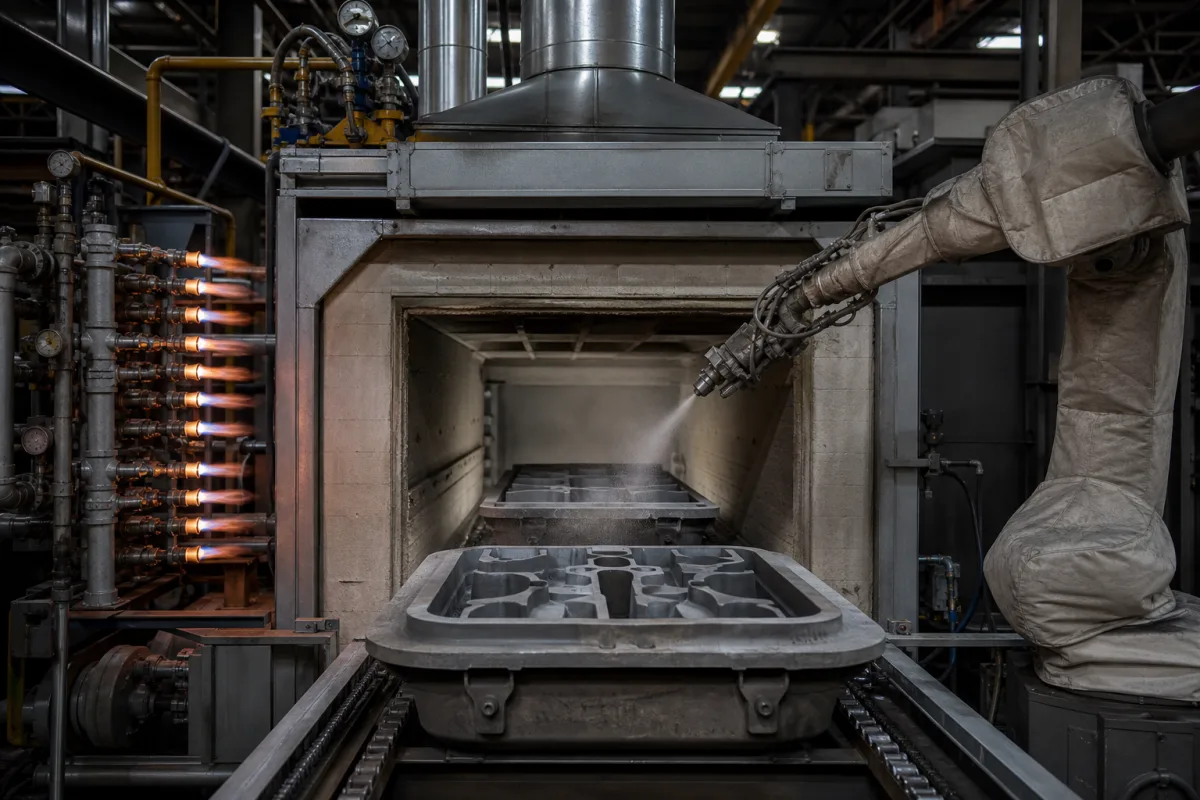
Technical details and manufacturing context for Automated Mold Preheating and Coating System
| Parameter | Typical range | Notes & selection driver |
|---|---|---|
| Preheat Temperature RangeRequired | 150–350 °C | Controllable heating range for molds |
| Coating Application AccuracyRequired | ±0.05 mm ± | Deviation in coating thickness |
| Max Mold Dimension (LxWxH)Required | 2000x1500x1200 mm | Largest mold size system can process |
| Power Consumption | 45–75 kW | Average operational power draw |
| Heating Rate | 5–15 °C/min | Faster rates reduce cycle time but may cause thermal stress. |
| Temperature Uniformity | ±5 °C | Critical for even coating and mold integrity. |
| Coating Thickness Range | 0.1–0.5 mm | Adjustable per casting requirements. |
| Cycle Time | 15–45 min | Includes preheating and coating; affects production throughput. |
| Operating Voltage | 380 ±10% V AC | Three-phase; other voltages available on request.IEC 60038 |
| IP Rating | IP54–IP65 | Protects against dust and water jets.IEC 60529 |
| Ambient Temperature Range | 0–45 °C | Outside this range, performance may degrade. |
| Machine Weight | 3500–5000 kg | Requires reinforced floor; varies with configuration. |
Ranges are indicative industry figures for RFQ preparation, not a supplier commitment. Confirm every value and standard with the legal manufacturer before ordering.
Commonly used trade names and technical identifiers for Automated Mold Preheating and Coating System.
| pressure: | 0.5-3 bar (coating application), atmospheric (preheating chamber) |
| flow rate: | 5-50 L/min (coating slurry delivery) |
| cycle time: | 15-90 minutes per mold |
| temperature: | Ambient to 600°C (preheating range), 50-200°C (coating curing) |
| mold size capacity: | Up to 2m x 2m x 1.5m |
| slurry concentration: | 10-40% solids by weight |
Indicative industry ranges for design and RFQ preparation. Confirm the exact figures and applicable standard with the manufacturer before specifying.
Quoted from the published standard.
Manufacturer profiles associated with Automated Mold Preheating and Coating System.
Manufacturer listings support early research and capability understanding. They are not certification, ranking, or transaction guarantees.
A practical evidence checklist for RFQ preparation and supplier evaluation.
CNFX does not score or rank suppliers. Buyers must verify all claims and documents with the legal manufacturer before ordering.
Preheating molds eliminates moisture and reduces thermal shock during casting, which helps prevent defects such as porosity and cracking. The system heats molds to a controlled temperature range of 150–350°C to ensure consistent mold quality.
After preheating, molds are moved to a coating station where robotic spray nozzles apply a uniform layer of refractory slurry or dry powder coating. The coating thickness can be adjusted between 0.1–0.5 mm, with an application accuracy of ±0.05 mm.
Important specifications include maximum mold dimensions (2000x1500x1200 mm), power consumption (45–75 kW), heating rate (5–15°C/min), temperature uniformity (±5°C), cycle time (15–45 min), operating voltage (380 V AC ±10% per IEC 60038), and operating pressure (1.0–1.6 MPa). Always verify these values with the manufacturer for your specific model.
The system requires a reinforced floor due to its weight (3500–5000 kg). It operates within an ambient temperature range of 0–45°C. Regular checks on heating elements, spray nozzles, and PLC settings are recommended to maintain performance. Ensure the IP rating (IP54–IP65) is suitable for your environment.
Editorial classification, named public sources where available, and source-reviewed manufacturer records.
Ask for use case, specification boundaries, supplier type, and RFQ preparation information for this product.
Compare manufacturer profiles with relevant product and process capability.