Industry-Verified Manufacturing Data (2026)

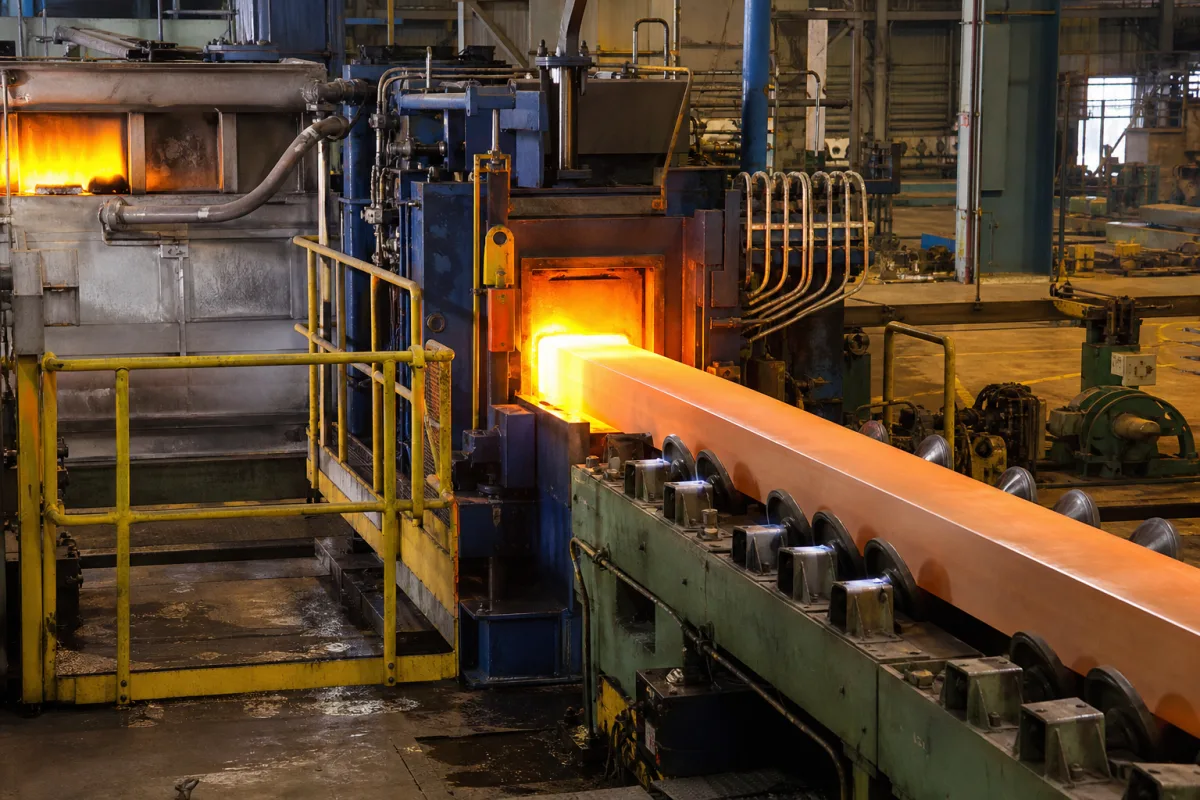
Continuous Casting Machine for Non-Ferrous Metals

Based on aggregated insights from multiple verified factory profiles within the CNFX directory, the standard Continuous Casting Machine for Non-Ferrous Metals used in the Basic Metal Manufacturing sector typically supports operational capacities ranging from standard industrial configurations to heavy-duty production requirements.

Technical Definition & Core Assembly

A canonical Continuous Casting Machine for Non-Ferrous Metals is characterized by the integration of Water-Cooled Mold and Withdrawal Unit. In industrial production environments, manufacturers listed on CNFX commonly emphasize High-Temperature Steel Alloy construction to support stable, high-cycle operation across diverse manufacturing scenarios.

Industrial machine that continuously solidifies molten non-ferrous metals into semi-finished shapes.

Product Specifications

Technical details and manufacturing context for Continuous Casting Machine for Non-Ferrous Metals

Definition
A continuous casting machine is a critical industrial equipment used in non-ferrous metal production facilities to transform molten metals like aluminum, copper, zinc, and lead into continuous strands, billets, or slabs. This machine enables high-volume production with consistent cross-sectional dimensions and improved metallurgical properties compared to traditional batch casting methods. It serves as a key link between smelting operations and downstream rolling or extrusion processes in B2B metal manufacturing supply chains. The equipment reduces material waste, energy consumption, and labor requirements while increasing production throughput for metal producers.
Working Principle
Molten metal is poured into a water-cooled mold where it solidifies at the surface, then continuously withdrawn through secondary cooling zones to complete solidification before being cut to length.
Common Materials
High-Temperature Steel Alloy, Copper Mold Plates, Refractory Lining, Stainless Steel Frame
Technical Parameters
  • Linear speed of solidified product exiting machine (m/min) Per Request
  • Temperature of molten metal at pouring point (°C) Per Request
Components / BOM
  • Water-Cooled Mold
    Initial solidification of molten metal into desired cross-section
    Material: Copper alloy with chromium plating
  • Withdrawal Unit
    Continuous extraction of solidified strand from mold
    Material: Hardened steel rollers with hydraulic drives
  • Secondary Cooling System
    Complete solidification through water spray or air mist cooling
    Material: Stainless steel nozzles and piping
  • Cutting System
    Shearing or sawing of continuous strand into specified lengths
    Material: Tungsten carbide blades or hydraulic shears
  • Control System
    Automated regulation of casting parameters and process monitoring
    Material: PLC with HMI interface
Engineering Reasoning
0.5-2.0 MPa casting pressure, 680-750°C mold temperature, 0.1-1.5 m/min casting speed
Mold temperature exceeding 780°C causes copper mold degradation, casting pressure below 0.3 MPa results in incomplete mold filling, casting speed above 2.0 m/min induces centerline segregation
Design Rationale: Thermal fatigue from cyclic heating/cooling (ΔT>100°C) causes mold crack propagation, solidification shrinkage stress exceeding 150 MPa induces hot tearing, Marangoni convection at 0.15 m/s creates surface defects
Risk Mitigation (FMEA)
Trigger Cooling water flow reduction below 80% design rate
Mode: Localized solidification delay causing bleed-out at secondary cooling zone
Strategy: Dual redundant cooling circuits with 120% capacity and flow sensors triggering automatic shutdown at 75% flow
Trigger Mold oscillation amplitude deviation beyond ±0.5 mm from 6 mm stroke
Mode: Periodic surface oscillation marks exceeding 0.3 mm depth
Strategy: Servo-hydraulic oscillation system with 0.1 mm position feedback and automatic stroke correction

Industry Taxonomies & Aliases

Commonly used trade names and technical identifiers for Continuous Casting Machine for Non-Ferrous Metals.

Industrial Ecosystem & Supply Chain DNA

Complementary Systems
Downstream Applications
Specialized Tooling

Application Fit & Sizing Matrix

Operational Limits
pressure: Atmospheric to 0.5 bar (mold cooling system)
flow rate: 0.5-10 tons/hour (continuous casting speed)
temperature: 400-1200°C (depending on metal alloy)
slurry concentration: Not applicable (handles molten metals only)
Media Compatibility
✓ Copper alloys (bronze, brass) ✓ Aluminum alloys ✓ Zinc alloys
Unsuitable: Ferrous metals (steel, iron) due to higher melting points and different solidification characteristics
Sizing Data Required
  • Required production capacity (tons/hour)
  • Desired cross-section dimensions (mm)
  • Alloy solidification characteristics (cooling rate requirements)

Reliability & Engineering Risk Analysis

Failure Mode & Root Cause
Thermal fatigue cracking
Cause: Repeated heating and cooling cycles from molten metal contact and water cooling cause stress concentration and crack initiation in mold copper plates and cooling system components.
Sticking and breakout
Cause: Inadequate mold lubrication, improper mold taper, or uneven cooling leading to solid shell sticking to mold walls and subsequent rupture of the partially solidified strand.
Maintenance Indicators
  • Visible surface defects on cast product (e.g., longitudinal cracks, rhomboidity, or oscillation marks)
  • Abnormal vibration or knocking sounds from mold oscillator or withdrawal unit during operation
Engineering Tips
  • Implement predictive maintenance using thermal imaging to monitor mold temperature distribution and detect hot spots before thermal fatigue failure occurs.
  • Optimize mold lubrication system with automated monitoring of lubricant flow rates and pressures to prevent sticking while minimizing lubricant consumption and contamination.

Compliance & Manufacturing Standards

Reference Standards
ISO 9001:2015 - Quality management systems ASTM B505/B505M - Standard Specification for Copper Alloy Continuous Castings CE Marking - Machinery Directive 2006/42/EC
Manufacturing Precision
  • Casting thickness: +/- 0.5% of nominal dimension
  • Roller alignment: +/- 0.1mm over 1 meter length
Quality Inspection
  • Ultrasonic testing for internal defects in cast sections
  • Chemical composition analysis via Optical Emission Spectrometry

Factories Producing Continuous Casting Machine for Non-Ferrous Metals

Verified manufacturers with capability to produce this product in China

✓ 97% Supplier Capability Match Found

P Procurement Specialist from Canada Feb 13, 2026
★★★★★
"Standard OEM quality for Basic Metal Manufacturing applications. The Continuous Casting Machine for Non-Ferrous Metals arrived with full certification."
Technical Specifications Verified
T Technical Director from United States Feb 10, 2026
★★★★★
"Great transparency on the Continuous Casting Machine for Non-Ferrous Metals components. Essential for our Basic Metal Manufacturing supply chain."
Technical Specifications Verified
P Project Engineer from United Arab Emirates Feb 07, 2026
★★★★★
"The Continuous Casting Machine for Non-Ferrous Metals we sourced perfectly fits our Basic Metal Manufacturing production line requirements."
Technical Specifications Verified
Verification Protocol

“Feedback is collected from verified sourcing managers during RFQ (Request for Quote) and factory evaluation processes on CNFX. These reports represent historical performance data and technical audit summaries from our B2B manufacturing network.”

7 sourcing managers are analyzing this specification now. Last inquiry for Continuous Casting Machine for Non-Ferrous Metals from Mexico (1h ago).

Supply Chain Commonly Integrated Components

Purge Air System

A system that provides controlled airflow to clear optical paths and protect sensors in molten metal temperature measurement applications.

Explore Specs →
Degassing Chamber

A specialized vessel within a molten metal degassing system where dissolved gases are removed from molten metal through controlled processes.

Explore Specs →
Gas Control System

A system that regulates and controls the flow, pressure, and composition of gases used in molten metal degassing processes.

Explore Specs →
Burner Assembly

A combustion system component that generates controlled flame for heating applications in industrial preheating stations.

Explore Specs →

Frequently Asked Questions

What materials can be processed with this continuous casting machine?

This machine is designed for non-ferrous metals including aluminum, copper, brass, bronze, and other alloys with melting points suitable for continuous casting processes.

How does the water-cooled mold system improve casting quality?

The water-cooled mold provides controlled solidification, reducing defects like porosity and ensuring consistent microstructure in the cast product for better mechanical properties.

What maintenance is required for the refractory lining?

Regular inspection for wear and thermal degradation is recommended, with replacement typically needed every 6-12 months depending on production volume and metal types processed.

Can I contact factories directly on CNFX?

CNFX is an open directory, not a transaction platform. Each factory profile provides direct contact information and production details to help you initiate direct inquiries with Chinese suppliers.

Get Quote for Continuous Casting Machine for Non-Ferrous Metals

Request technical pricing, lead times, or customized specifications for Continuous Casting Machine for Non-Ferrous Metals directly from verified manufacturing units.

Your business information is encrypted and only shared with verified Continuous Casting Machine for Non-Ferrous Metals suppliers.

Thank you! Your message has been sent. We'll respond within 1–3 business days.

Need to Manufacture Continuous Casting Machine for Non-Ferrous Metals?

Connect with verified factories specializing in this product category

Add Your Factory Contact Us
Previous Product
Continuous Casting Machine
Next Product
Continuous Casting Mold Assembly