Industry-Verified Manufacturing Data (2026)

Level Indicator

Based on aggregated insights from multiple verified factory profiles within the CNFX directory, the standard Level Indicator used in the Chemical Manufacturing sector typically supports operational capacities ranging from standard industrial configurations to heavy-duty production requirements.

Technical Definition & Core Assembly

A canonical Level Indicator is characterized by the integration of Sensor/Probe and Display Unit. In industrial production environments, manufacturers listed on CNFX commonly emphasize Stainless steel construction to support stable, high-cycle operation across diverse manufacturing scenarios.

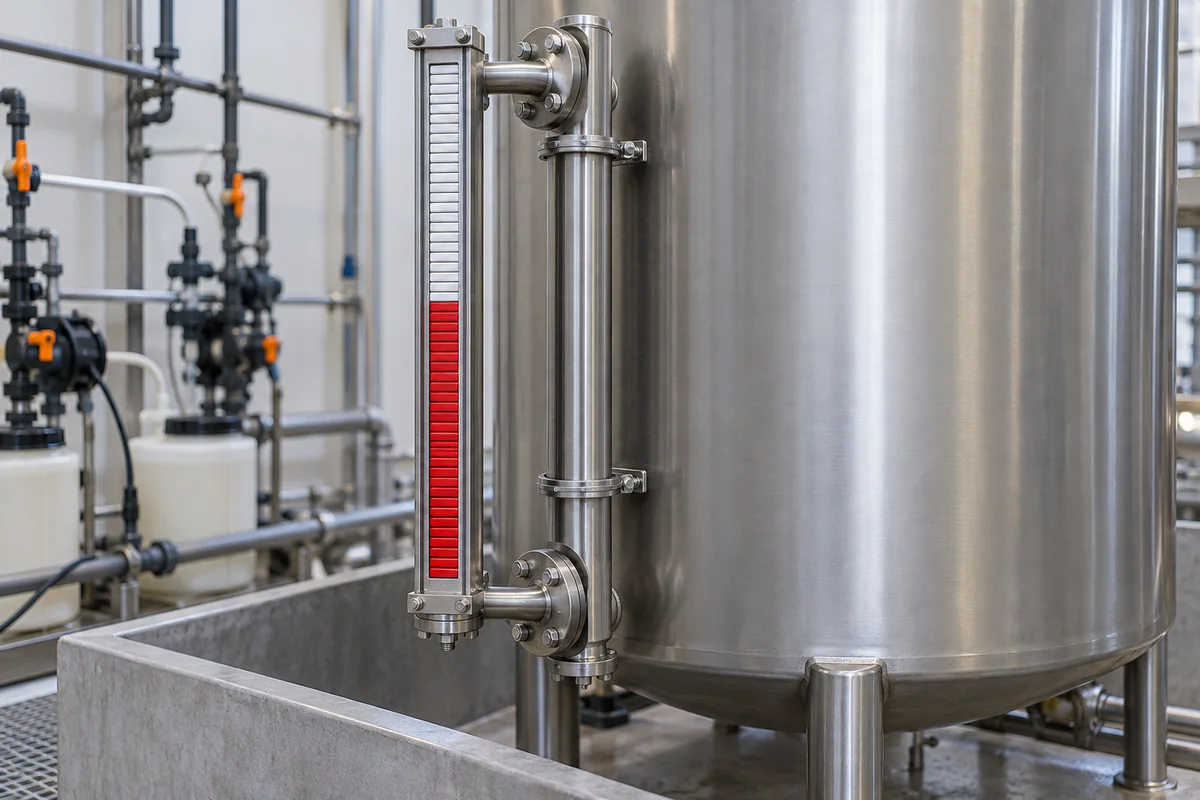
A device that visually or electronically displays the liquid level within a chemical storage tank.
Product Specifications

Technical details and manufacturing context for Level Indicator

Definition
A critical monitoring component of chemical storage tanks that provides real-time indication of liquid volume or height. It enables operators to track chemical inventory, prevent overfilling or underfilling, and ensure proper tank operation. Level indicators are essential for safety, process control, and inventory management in chemical handling facilities.
Working Principle
Level indicators operate through various mechanisms including float-based mechanical systems, pressure sensors, ultrasonic measurement, capacitance probes, or radar technology. The device detects the liquid level and converts this measurement into a visual display (gauge, digital readout) or electronic signal for monitoring systems.
Common Materials
Stainless steel, Polypropylene, Glass, PTFE
Technical Parameters
  • Measurement range indicating the minimum to maximum level the device can accurately detect (mm) Per Request
Components / BOM
  • Sensor/Probe
    Detects the liquid level through physical contact or remote sensing
    Material: Stainless steel or chemical-resistant polymer
  • Display Unit
    Shows the measured level through analog dial, digital readout, or electronic output
    Material: Polycarbonate, aluminum, or stainless steel
  • Mounting Hardware
    Secures the indicator to the tank with proper sealing
    Material: Stainless steel
  • Seals/Gaskets
    Prevents leaks between the indicator and tank connection
    Material: Viton, EPDM, or PTFE
Engineering Reasoning
0-100% full scale with ±0.5% accuracy at 20°C ambient temperature
Exceeds 85°C operating temperature or experiences >2.5g vibration amplitude at 60Hz
Design Rationale: Thermal expansion mismatch between float material (316L stainless steel, α=16.0×10⁻⁶/°C) and guide tube (borosilicate glass, α=3.3×10⁻⁶/°C) causing mechanical binding
Risk Mitigation (FMEA)
Trigger Electrolytic corrosion from chloride ion concentration >25ppm in process fluid
Mode: Float pitting and mass loss exceeding 0.5g, causing buoyancy miscalibration
Strategy: Hastelloy C-276 float construction with electropolished surface finish Ra<0.4μm
Trigger Magnet coercivity degradation from continuous exposure to 120°C operating temperature
Mode: Hall effect sensor output drift exceeding ±2.5% from calibrated zero point
Strategy: Samarium-cobalt magnets (Sm₂Co₁₇) with Curie temperature of 800°C and temperature compensation circuit using PT1000 RTD

Industry Taxonomies & Aliases

Commonly used trade names and technical identifiers for Level Indicator.

Applied To / Applications

This component is essential for the following industrial systems and equipment:

Industrial Ecosystem & Supply Chain DNA

Complementary Systems
Downstream Applications
Specialized Tooling

Application Fit & Sizing Matrix

Operational Limits
pressure: 0 to 25 bar
other spec: Slurry concentration up to 60% solids by weight, Viscosity range: 1 to 10,000 cP
temperature: -40°C to 200°C
Media Compatibility
✓ Water-based solutions ✓ Hydrocarbons (diesel, gasoline) ✓ Corrosive chemicals (acids, bases) with compatible wetted materials
Unsuitable: High-purity pharmaceutical/biotech applications requiring sterile conditions
Sizing Data Required
  • Tank height and diameter
  • Required measurement accuracy (± mm)
  • Process connection type and size

Reliability & Engineering Risk Analysis

Failure Mode & Root Cause
Sensor fouling/coating
Cause: Accumulation of process media (sludge, scale, viscous fluids) on sensing elements, causing inaccurate readings or complete failure.
Electronic component failure
Cause: Moisture ingress, temperature extremes, or power surges damaging circuit boards, transmitters, or communication modules.
Maintenance Indicators
  • Erratic or frozen level readings despite known process changes
  • Visible corrosion, moisture, or physical damage to housing or wiring connections
Engineering Tips
  • Implement regular cleaning schedules using appropriate solvents or mechanical methods compatible with sensor materials and process media
  • Ensure proper sealing of enclosures, use conduit seals, and verify electrical grounding to protect against environmental and electrical hazards

Compliance & Manufacturing Standards

Reference Standards
ISO 9001:2015 - Quality management systems ANSI/ASME B40.1 - Gauges: Pressure and Temperature-Indicating DIN 877 - Spirit levels and level gauges
Manufacturing Precision
  • Bubble vial sensitivity: +/- 0.5 mm/m
  • Reference surface flatness: 0.02 mm
Quality Inspection
  • Calibration verification against master level
  • Dimensional accuracy check with coordinate measuring machine

Factories Producing Level Indicator

Verified manufacturers with capability to produce this product in China

✓ 97% Supplier Capability Match Found

P Procurement Specialist from Canada Feb 24, 2026
★★★★★
"Found 25+ suppliers for Level Indicator on CNFX, but this spec remains the most cost-effective."
Technical Specifications Verified
T Technical Director from United States Feb 21, 2026
★★★★★
"The technical documentation for this Level Indicator is very thorough, especially regarding technical reliability."
Technical Specifications Verified
P Project Engineer from United Arab Emirates Feb 18, 2026
★★★★★
"Reliable performance in harsh Chemical Manufacturing environments. No issues with the Level Indicator so far."
Technical Specifications Verified
Verification Protocol

“Feedback is collected from verified sourcing managers during RFQ (Request for Quote) and factory evaluation processes on CNFX. These reports represent historical performance data and technical audit summaries from our B2B manufacturing network.”

14 sourcing managers are analyzing this specification now. Last inquiry for Level Indicator from Brazil (27m ago).

Supply Chain Compatible Machinery & Devices

Automated Batch Crystallization System

Automated system for controlled crystallization of chemical compounds in batch processes.

Explore Specs →
Automated pH Monitoring and Dosing System

Automated system for continuous pH monitoring and chemical dosing in process streams.

Explore Specs →
Automated Powder Dispensing and Blending System

Automated system for precise dispensing and homogeneous blending of powdered chemicals.

Explore Specs →
Automated Solvent Recovery and Purification System

Automated system for recovering and purifying industrial solvents.

Explore Specs →

Frequently Asked Questions

What materials are best for corrosive chemical level indicators?

For corrosive chemicals, PTFE (Teflon) and polypropylene level indicators offer excellent chemical resistance. Stainless steel (316L grade) works well for many applications, while glass provides visibility but requires careful handling.

How do I choose between visual and electronic level indicators for chemical tanks?

Visual indicators (like sight glasses) provide direct observation but may have limitations with opaque or hazardous chemicals. Electronic indicators with sensors offer remote monitoring, digital accuracy, and alarms for critical level management in chemical manufacturing.

What maintenance do chemical tank level indicators require?

Regular inspection of seals/gaskets for leaks, cleaning of sensors/probes to prevent buildup, and calibration of electronic displays ensure accuracy. Material compatibility with stored chemicals is crucial to prevent degradation.

Can I contact factories directly on CNFX?

CNFX is an open directory, not a transaction platform. Each factory profile provides direct contact information and production details to help you initiate direct inquiries with Chinese suppliers.

Get Quote for Level Indicator

Request technical pricing, lead times, or customized specifications for Level Indicator directly from verified manufacturing units.

Your business information is encrypted and only shared with verified Level Indicator suppliers.

Thank you! Your message has been sent. We'll respond within 1–3 business days.

Need to Manufacture Level Indicator?

Connect with verified factories specializing in this product category

Add Your Factory Contact Us
Previous Product
Level Gauge / Sight Glass
Next Product
Level Sensor