Condenser
View system integration details
This page explains how Fan (Air-Cooled) is classified within Machinery and Equipment Manufacturing. Technical values and manufacturer relationships are research references; confirm the current specification and supplier evidence for each order.
A mechanical device that moves air to facilitate heat dissipation in air-cooled condensers.
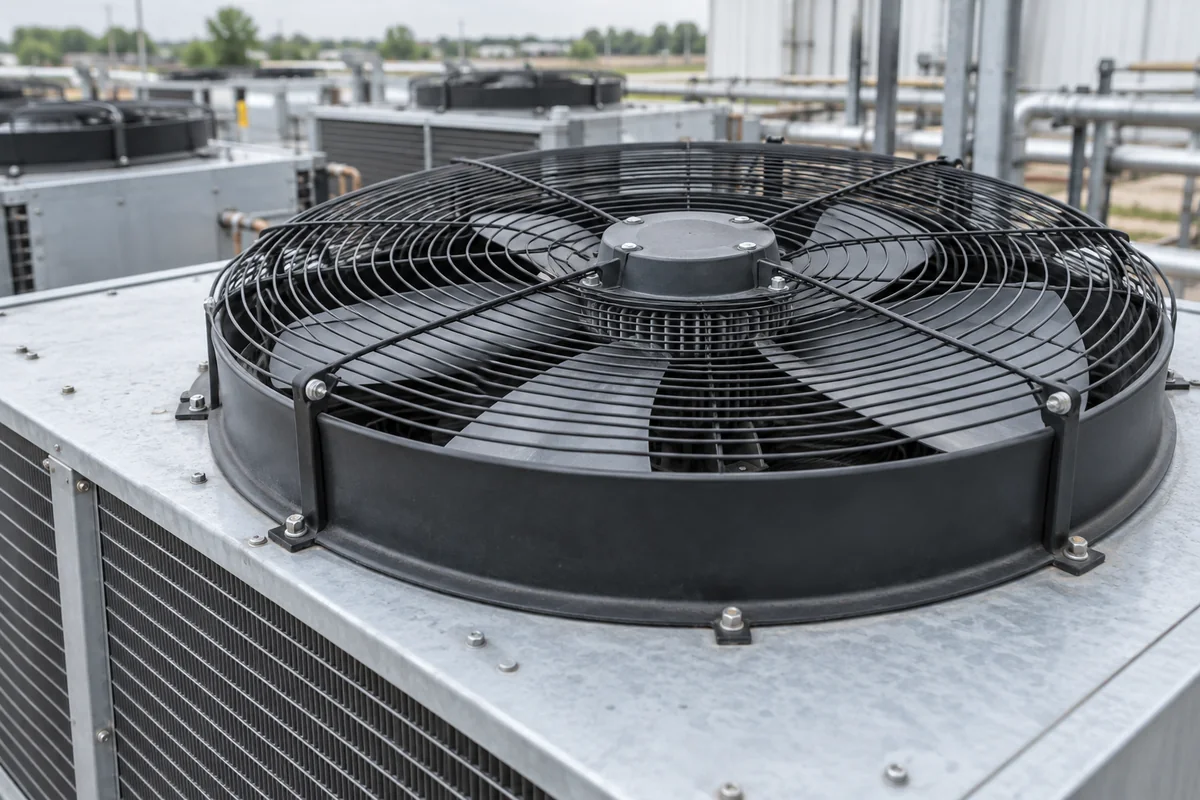
Technical details and manufacturing context for Fan (Air-Cooled)
| Parameter | Typical range | Notes & selection driver |
|---|---|---|
| Air Flow Rate | 500–5000 m³/h | Determines cooling capacityISO 5801 |
| Static Pressure | 50–500 Pa | Overcome system resistanceISO 5801 |
| Fan Diameter | 200–800 mm | Affects airflow and footprint |
| Speed | 500–3000 rpm | Higher speed increases airflow and noise |
| Noise Level | 40–70 dB(A) | Workplace and environmental limitsISO 3744 |
| Power Consumption | 0.1–5.5 kW | Energy efficiency and operating cost |
| Voltage | 220–480 V AC | Match local supplyIEC 60038 |
| Frequency | 50–60 Hz | Motor speed depends on frequencyIEC 60038 |
| Operating Temperature | -20–60 °C | Ambient range for reliable operation |
| Ingress Protection | IP54–IP65 | Dust and water resistanceIEC 60529 |
| Material | Aluminum/Steel | Corrosion resistance and weight |
| Weight | 5–50 kg | Handling and installation |
Ranges are indicative industry figures for RFQ preparation, not a supplier commitment. Confirm every value and standard with the legal manufacturer before ordering.
| pressure: | Atmospheric to 0.5 bar differential pressure |
| flow rate: | 100-50,000 CFM (typical range) |
| temperature: | -20°C to 80°C (operating ambient) |
| slurry concentration: | Not applicable - designed for clean air only |
Indicative industry ranges for design and RFQ preparation. Confirm the exact figures and applicable standard with the manufacturer before specifying.
Quoted from the published standard.
A practical evidence checklist for RFQ preparation and supplier evaluation.
Compare the published product scope and source details, then include your specifications and quantity in an enquiry.
12 companies list this product among what they make. Company figures are quoted from each company's own website; every card states where the relationship came from.
Explore company information and manufacturing capabilities, then discuss the scope of your project with a relevant supplier.
Ask for use case, specification boundaries, supplier type, and RFQ preparation information for this product.
The fan generates airflow across the condenser coils to transfer heat from the refrigerant to the ambient air, facilitating the condensation process in refrigeration and air conditioning systems.
Key parameters include air flow rate, static pressure, fan diameter, speed, noise level, power consumption, voltage, frequency, operating temperature, ingress protection, material, and weight. These must be matched to the system's requirements and verified with the manufacturer.
Relevant standards include ISO 5801 for airflow and pressure testing, ISO 3744 for noise measurement, IEC 60038 for voltage and frequency, and IEC 60529 for ingress protection. These standards serve as references for verification, not as proof of compliance.
The fan's airflow and static pressure directly influence heat transfer efficiency. Proper selection ensures adequate cooling while minimizing energy consumption and noise, contributing to overall system performance.
This component is essential for the following industrial systems and equipment:
Commonly used trade names and technical identifiers for Fan (Air-Cooled).
Editorial classification, named public sources where available, and source-reviewed manufacturer records.
Compare manufacturer profiles with relevant product and process capability.